
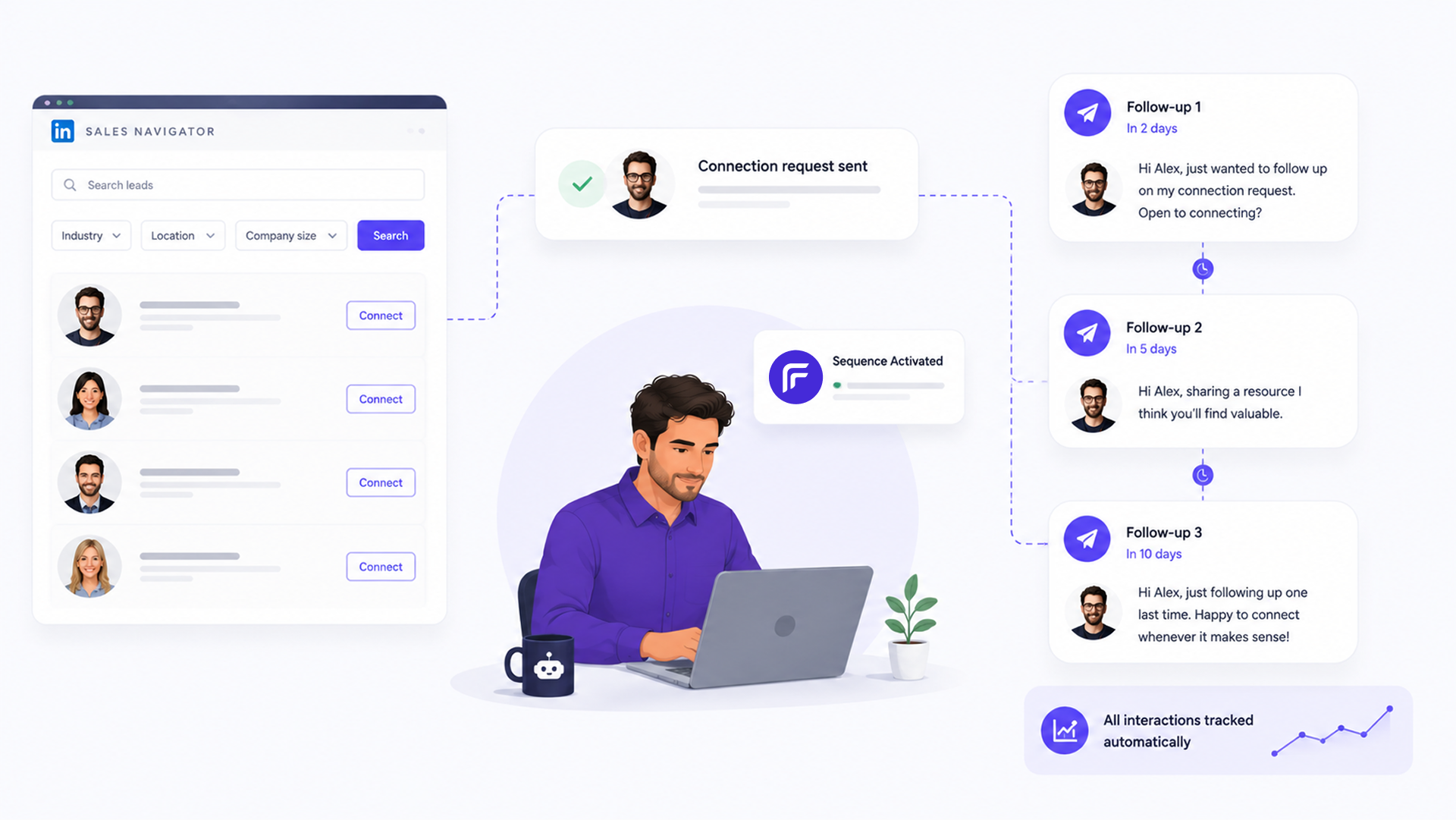
A connection request without a note gets treated like a cold email with no subject line. Adding something relevant dramatically improves acceptance rates, but writing a personalized note for every Sales Navigator result is not sustainable at volume. And even when requests are accepted, most outreach stalls because the follow-up does not happen fast enough or at all.
This workflow handles both. Claude builds a multi-step sequence in toflow: a connection request with a personalized note, then up to three follow-ups that fire only after the request is accepted. You describe who you are targeting from Sales Navigator and why. Claude sets up the sequence, writes the content for each person, and toflow runs it.
How to connect toflow with Claude
toflow.ai has a built-in MCP server that lets Claude control your Sales Navigator outreach directly. It works with Claude Desktop, Cursor, Windsurf, or any MCP-compatible client.
Step 1: Connect your LinkedIn account to toflow
Log into the toflow app and go to Settings, then Accounts, then Connect LinkedIn. Connect the account that has Sales Navigator. This is the account Claude will use to send requests and messages on your behalf.
Step 2: Connect toflow to Claude Desktop
- Open Claude Desktop, go to Settings, then Connectors, then Add Custom Connector
- Set the Name to toflow.ai and the URL to https://mcp.toflow.ai/mcp, then save
- Click Connect. Claude will open a browser window to authorize your toflow account
- Once authorized, start a conversation. Claude can now build sequences, send connection requests, and log every interaction in toflow
Using Cursor, Windsurf, or another MCP client? Add this to your config file instead:
{
  "mcpServers": {
    "toflow": {
      "type": "http",
      "url": "https://mcp.toflow.ai/mcp"
    }
  }
}
Once connected, describe what you want in plain language and Claude handles the rest.
What you give / What you get
What you give
- Your Sales Navigator search URL or saved list URL
- Context about who you are reaching out to and why
- Your preferred tone, follow-up timing, and daily sending limits
What you get
- A sequence in toflow with a connection request step and up to 3 follow-up steps
- A personalized connection note and follow-ups written per person by Claude
- Follow-ups sent only after the connection is accepted, not to everyone
- Every step logged in toflow automatically
What this workflow does automatically
Claude creates a multi-step sequence in toflow. The first step is a LinkedIn connection request with a personalized note. The follow-up steps fire only after the request is accepted, spaced out by the gaps you define — one day, three days, five days, or whatever cadence fits your outreach style. People who ignored the request never receive the follow-ups.
Before enrolling each prospect, Claude reads their profile and recent posts. It looks for something specific to reference: a topic they have been posting about, a company update, or something in their current role. The connection note is written fresh for that person, not pulled from a template.
Once the sequence is running, toflow spaces requests across the day within your daily limit. Every send, acceptance, and follow-up logs automatically. Replies land in your toflow inbox, categorized and ready for you to respond.
How teams use this workflow
SDRs running high-volume outbound from Sales Navigator
Pull a list from Sales Navigator, give it to Claude with context about the persona and the offer. Claude writes a different connection note for every person based on their profile. You review the batch, approve it, and the sequence runs. When someone accepts, the follow-ups fire automatically on schedule. You only step in when there is a real reply.
Founders doing outreach without a team
Founders using this workflow run consistent outreach without spending hours on it each week. Claude handles the research and writing. You stay in control by reviewing before anything sends. The follow-ups happen even when you are focused on something else.
Agencies running campaigns for clients
Each message reflects the specific prospect and the client's context, not a shared template. Volume stays consistent across large Sales Navigator lists without quality dropping.
Step by step
- Run your search in Sales Navigator and copy the search URL or saved list URL
- Share the URL with Claude
- Tell Claude why you are reaching out and your preferred tone and follow-up timing
- Claude builds a sequence in toflow: connection request plus up to 3 follow-up steps
- Claude reads each profile and writes personalized content for every step
- Review the sequence and content before anything sends
- toflow sends connection requests at a human pace within your daily limits
- When a request is accepted, follow-ups fire automatically on schedule
- Replies land in your toflow inbox, ready to respond
Best practices
Start with 15 to 20 connection requests per day and increase gradually. LinkedIn monitors sudden spikes in activity and conservative limits protect your account.
Give Claude specific context about your offer and why you are reaching out to this persona. Vague input produces generic notes. The more specific you are, the more the message sounds like it came from you.
Review the notes before the sequence runs. Claude writes from profile data, but a quick scan before approving catches anything that needs adjusting.
Do not shorten the gap between the connection request and the first follow-up. A message that arrives the moment someone accepts reads as automated. The timing is part of what makes it land well.
Space your follow-ups across several days. Three follow-ups sent two days apart is far more effective than three sent on consecutive days.
Ready to try it?
Connect toflow to Claude, describe your Sales Navigator list and what you are reaching out about, and have your first multi-step sequence running in minutes. No coding required.
Book a demo. 2 weeks free, no credit card required.